
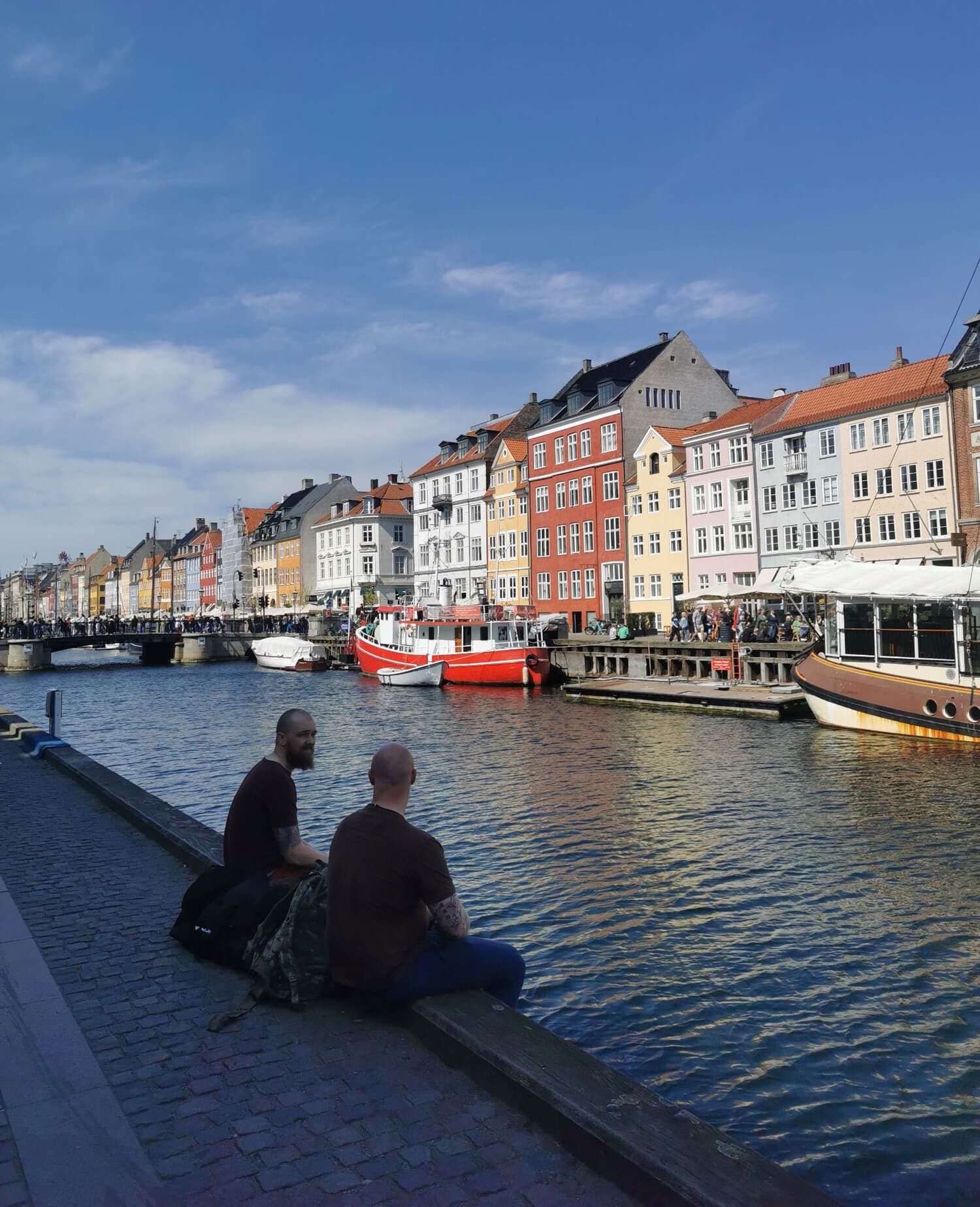
The land of strong contrasts and LEGO.
Guess what, if you get yourself a new laptop that does not sound like an airplane taking off every time you use it, you will be more inspired to write blog posts and will magically find the time for it even though you are busy. At least that’s how it is for me, so here we go with a new Travel Trivia post. This one features 12 fun facts about Denmark, a new country on my list that my partner and I visited in May this year.
I found Denmark to be a land of strong contrasts, particularly the one between hygge, the Danish concept of cosy wellbeing, and a very strong militaristic mindset. Perhaps Denmark’s national spirit is the true manifestation of the saying “if you want peace, prepare for war”? Anyhow, let’s dive into the fun facts about Denmark and you will see what I mean.
- Denmark traces its roots back to the Viking Age, when the first kings who ruled the area corresponding to present-day Denmark appeared. The name “Denmark” was first mentioned in written record on a rune stone around 965 AD. The rune stone was that of king Harald Bluetooth, whose name was later used by Ericsson engineers to name their wireless Bluetooth technology. Why? Read here, it’s the most engineer thing ever.
- Denmark has 444 islands, but only 76 of them are inhabited.
- The Danish flag called “Dannebrog” is one of the oldest flags in the world. Dating back to 1219, it supposedly fell from Heaven during the Battle of Lyndanisse and symbolised God’s support for the then King Valdemar II. and his fight against the pagan Estonians.
- Denmark has compulsory military service for all men above the age of 18 and there has been recent talk of extending the conscription service to women as well. However, because so many men volunteer each year, not all young men are conscripted and they have to hold a lottery to determine who gets to serve and do the basic training.


- In total contrast to the militaristic enthusiasm described above, the whole of Denmark is premeated by the concept of hygge, a word that describes the feeling of cosy, contented comfort. Hygge is not just a feeling, it is a mood. The best way to induce it is with soft lighting, candles, comfortable, fluffy clothes and a nice warm drink while in the company of a select small group of friends and family in an intimate atmosphere of togetherness. Sounds easy enough, right? Well, there’s a whole book manual written about it and I even recommended it in one of my book recommendations posts.
- Danes are consistently ranked at the top of the world’s happiest countries in the UN World happiness report, which they like to attribute to hygge.
- In full contrast again, Denmark is also the homeland of Hans Christian Andersen, who was incapable of writing a story with a happy ending. Andersen is widely known as one of the first writers who took fairy tales and children’s stories seriously and elevated them to a respected form of literature. All of his stories are profoundly beautiful and show a deep understanding of human nature, so even though most of the endings are downright sad, it is my opinion that his stories constitute an important and wonderful childhood experience. 🙂


- The famous LEGO bricks were invented in Denmark in 1949 and remain amongst the most popular and durable children’s toys until today. Since 2018, all LEGO bricks are made with sugarcane plastic and they are working towards producing them fully out of recycled plastic. You can also visit Legoland, the LEGO-themed amusement park.
- Not coincidentally, the world’s oldest amusement parks, Bakken (1583) and Tivoli Gardens (1843), are both located in Denmark in the Copenhagen area. Tivoli Gardens also has one of the world’s oldest still running roller coasters from 1914, which we of course had to try out, but more on that in the upcoming Copenhagen travel post. Can you imagine people in 1914, at the onset of WW2 in a completely different world from today, taking a funky train ride on a roller coaster?
- Also, there is no word for “please” in the Danish language. That is also the reason why Danes can come across as rude and arrogant when speaking English, because they just can’t get used to saying “please” at appropriate times. To be fair, they are a bit arrogant as a nation and the popular stereotype goes that they perceive themselves to be the best English-speaking foreigners out there, as they even think they speak it without an accent (the Danish accent is very strong and distinctive).


- Last but not least, a few words on Danish food. Like their Nordic neighbours, they are very big on pølser, the Danish hot dogs with red sausages. Personally I love them and I ate a lot of them in Sweden and Norway as well. Another national favourite are the smørrebrød open-faced sandwiches with their signature rye bread. You can get them pretty much anywhere and with anything as a topping, so I recommend you try several different ones at every open food market you see.
There are of course a lot of seafood dishes and fried dough desserts, such as pancake balls, but if you want to try an authentic Danish meal in Copenhagen, try the Søpromenaden restaurant. It is a very old school place with the type of classic and not-high-end food that you’d get at your grandmother’s place if you were Danish (meat, potatoes, pickled stuff and a lot of gravy). All the guests besides us were in fact, middle-aged Danes, and there weren’t a lot of different choices on the menu, but the vibe was perfect. The waiter spoke very good Danish English when he told us that they only serve classic soft drinks like Coca-Cola, Fanta and 7up – none of that fancy stuff like ice tea there – and when he firmly advised us not to order more than one course, because all the Danes usually don’t due to the large main course portions. We still ordered dessert though and he seemed kind of excited about it. 🙂


- Also, the Danes love their brunches and they do them extremely well. There are a lot of brunch places in Copenhagen where you get a long list of brunch items on offer and you can pick and choose your own menu. The one we tried was Wulf & Konstali in Amager and everything was super cute and delicious. You’ll need to arrive early or reserve a spot well in advance though, as most of the brunch places are super popular and small in order to stay cosy.


And with these brunch envy images this post concludes. I hope you enjoyed my 12 fun facts about Denmark and as always, let me know in the comments if I got something wrong or if you want to share some additional facts.

Share your thoughts with me