
Ironically, the very thing that makes a PhD so very frustrating is also what still makes it valuable.
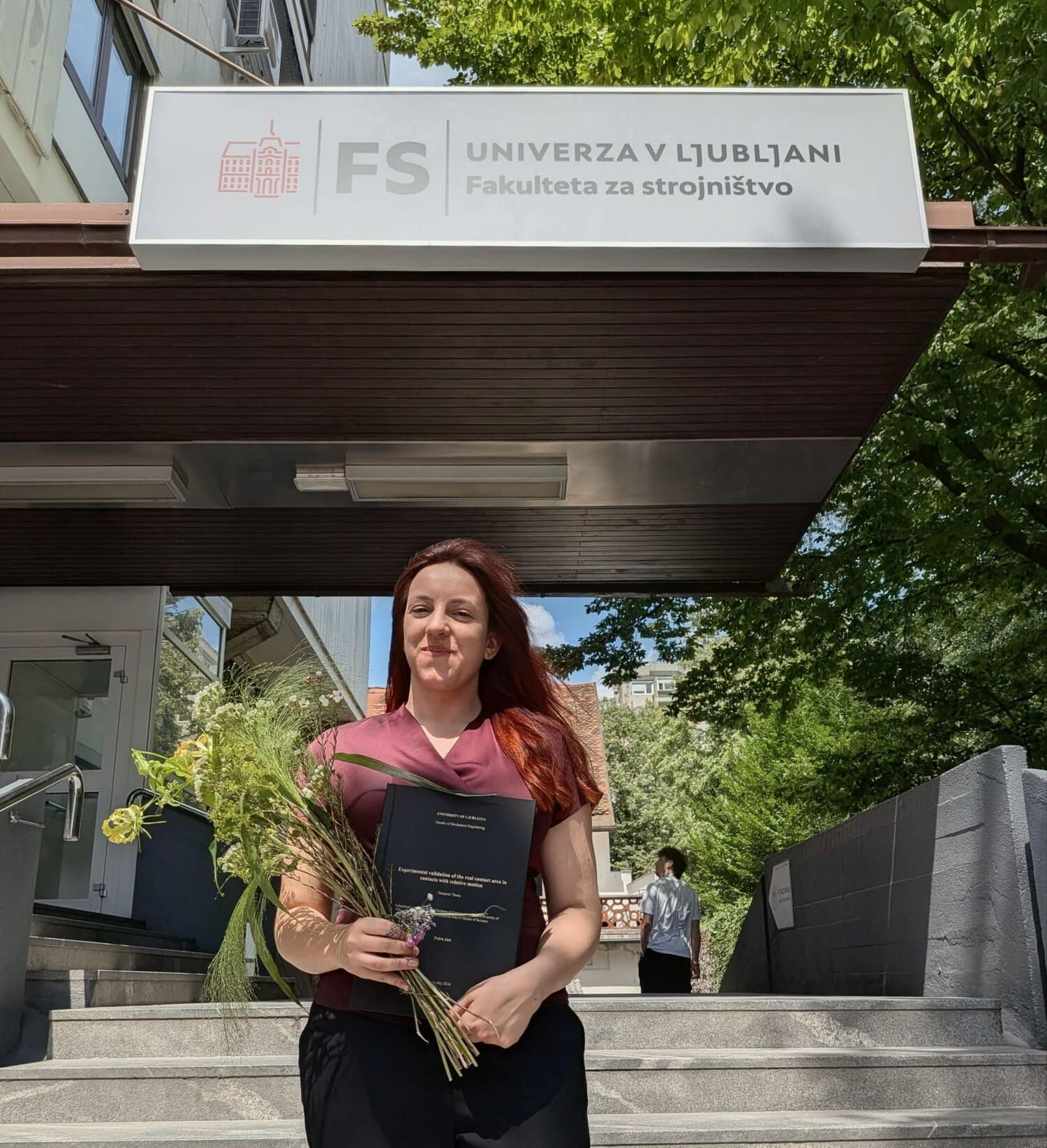
On July 7th I finally defended my PhD in Mechanical Engineering, closing a life chapter that brought many important lessons, least of all in the scientific domain. It took me almost 7 years to finish and none of it happened on the timeline I imagined, but perhaps that was the most important lesson of all.
I’ll first say that it takes a special kind of perseverance to build a career in academia that I have not seen in business so far. If you want to build a startup, capitalism is there to help you. The market will tell you whether you succeed, because you must also be in the right place at the right time, but as long as you are creating value, the world wants to enable you. However, if your aim is to create knowledge and dive deep into a narrow research topic with unclear value and outcome, we’ve made it really hard to do that.
Higher education has historically been one of the least accessible life goals for the average person, and it feels like academia continues to keep it that way. There’s an inherent bias that science is a higher calling worth suffering for, which academics are almost proud of, and it feeds into the upper-class narrative that money is dirty and not to be discussed. I don’t think this elitism does anyone any favours.
Academia operates on a different timescale.
Where I’m from in Slovenia, all education is completely free and I only had to pay minor administrative fees throughout primary school to PhD, which is a major outlier compared to life-altering student loans elsewhere. Despite significant improvements in education accessibility across the world, there are still so many bureaucratic hurdles and procedural delays that, for most people, life happens before they manage to finish their degrees. That is also why having a timeline for your life is an illusion. It is useful as a direction, but when it comes to academia, none of the deadlines are actually fixed.
Counting back, it took me 81 months to finish, which is 6 years and 9 months, or, in other words: 1 coronavirus pandemic, 1 house move and 5 years of DIY home renovation, 1 burnout, 2 job switches, 2 promotions, 13 countries visited and 318 blog posts. I’d rather not count the number of my thesis and paper draft revisions, because it’s through the roof, but the fun part is that no one is ever going to care how long it took. Only I can choose whether to see it as a symbol of perseverance or as being late.
From first to last day


In the outside world, a PhD is considered the highest level of education, whereas in academia it is the entry-level qualification. That can really mess with your sense of self-worth while you’re doing your degree, because if “everyone” can do it, why is it so hard for you? It is of course a matter of perspective, because not everyone is doing it – in fact, only about 2% of people in developed countries hold a doctorate. And it is hard because it is supposed to be hard. It’s a multi-year specialized research project at the frontier of science, where, in the end, no one in the world will know more about that specific topic than you. Literally no one else at that point in time. This thought is both ego-affirming and incredibly scary, and I think this duality is the whole thrill of it, comparable to extreme sports where the only person you can really rely on is yourself.
A PhD is also the perfect environment for chronic stress because it ticks all 4 conditions: novelty, unpredictability, threat to the ego, and a low sense of control over what is going on. Mental health of young researchers is notoriously bad, because academia is a global system with built-in issues, which also means that the bad parts of the PhD experience are more or less universal (both according to conversations with my fellow PhDs and the Internet data).
The phrase “publish or perish” exists for a reason.
Academia is full of very smart people, but the system is rigged to keep them down. Someone has to profit in the end, and most often it is not those creating the knowledge. Apparently, not many people know how academic publishing works, because it is a public secret that the whole system is inherently a pyramid scheme, even though much of the technology we now have widely available and industrialised was born in academia. To secure research funding, you need enough academic points in your H-index, which means publishing in peer-reviewed scientific journals. Journals are ranked according to prestige; the better the journal, the more points you get.
However, you need to pay to publish, and your paper must pass peer review by 2 – 3 researchers already qualified in the field. The reviewers are not paid, yet you cannot publish without their approval, so the quality and availability of peer review are questionable from the start. Reviews can take months, followed by multiple revision rounds to satisfy comments from those who have too much time on their hands and use the system to further inflate their egos (there are a lot of academic jokes about Reviewer #2). Then you also need to pay to access papers published by others, which you conveniently need to read to do a proper literature review and calibrate the direction of your research. That is also why you don’t see any independent scientists publishing papers, because the fees are high and it’s typically the institution that pays, although Europe has been making some moves in open access publishing, so fingers crossed.
It is then no wonder that those who are successful in academia are the product of their environment: from ambitious, power-tripping professors who don’t let anyone in their research group grow and drain their students dry, to laid-back, toothless tenured professors who have published enough and now quietly sit in their corner until they retire. Neither extreme makes for a good mentor. The former will push you well beyond your limits without support, while the latter will offer superficial support without relevant feedback or advice. What they have in common is that they are overly busy and will take a month for even the smallest action point.
The field and the mentor define the quality of your PhD experience.
There was a lot of good during my PhD (I got to build my own test rig!), but there was also a lot of bad, which I will not get into publicly on the Internet. My PhD is in Tribology, a sub-field of Mechanical Engineering dealing with contacts, lubrication, and wear, while my partner’s PhD is in Archaeology. Same university, but completely different experiences in terms of thesis requirements, research methodology, mentorship, and opportunities. Ideally, you want a mentor who is still relevant in their field and will both challenge and support you with compassion. A PhD is inherently outside anyone’s comfort zone, so support is essential, but so is the challenge to keep you at pace, because 4 years to finish can seem like a long time but still won’t be enough to do everything you’d want to work on.
Unfortunately, brilliant scientists are often not also brilliant mentors (particularly in STEM fields, where many tech people are naturally more comfortable working with systems rather than people). There’s a mock saying in Slovenia that “those who can’t do, teach”, but I think it should be the other way around: “those who do, shouldn’t teach unless they decide to learn how”.
Teaching and mentoring are non-negligible skills that require empathy, understanding of human psychology and soft skills that many academics simply don’t have. Research has consistently shown that subject expertise and teaching ability are not the same, yet the very academia that produced this research fully ignores it. The system is built so that the highest form of research is becoming a professor (there are science-only career tracks in theory, but in most countries, they are rarely utilised due to funding constraints). Researchers are expected to mature into teaching staff, most often without any formal teaching training. That leaves them either resentful that they have to deal with students or lacking empathy for the fact that everyone learns in a different way.
I was also forced to teach students during my PhD, as in Slovenia it is a mandatory activity for all researchers, and unlike in some countries, you don’t get extra time to complete your PhD because of it. I decided very early on that my students were not to blame for the system, my choices, or my busy schedule, so I tried to teach them from a place of curiosity and passion for my field. I approached it as a learning experience, so my teaching evaluations were always positive, but it was hard work to not lose that perspective, particularly when they’d write stupid shit in the exams.
One of the best indicators, besides speaking with former students, is to check how long it takes a supervisor’s PhD students to graduate on average. The procedural milestones are often publicly listed on university websites (from the viva to the final defence date). 1 or 2 students taking longer than expected is normal because we are all different and life happens while you make other plans, but everyone habitually taking longer than 4-5 years is a pattern. It usually means the mentor is overloaded with responsibilities within a large research group, or the PhD students are overloaded with teaching, additional projects, and administrative work (most often both).
In my experience, there is a lot of learning and value to be found in teaching and additional projects alongside your PhD, but it is good to know what you are getting into in advance – whether your PhD will be primarily focused on your research like my partner’s was, or if it will feel like 7 different jobs at once like mine was. What I can promise you is that no matter how well you prepare, it will not be straightforward. That is both the beauty and curse of research.
Academia optimises for being correct, while business optimizes for being useful.
It’s a cliche, but I truly believe passion and perseverance (or grit) will get you through anything, which is backed by a large body of research showing that if you love what you do, you are more likely to succeed, and if you want to do hard things, you need all the help you can get. When my researcher and teaching assistant contract at the university ended after 4.5 years and I decided not to extend, I was technically done with the content of my PhD, but my papers were not yet published (the first had just entered peer review), and I still had to write my thesis. During the 2 years that followed, I focused on finding my place outside academia, as I wasn’t sure what exactly I wanted to do and the world is a wide and bright place for an engineer. After half a year in R&D and almost starting my own business, I ended up in deep tech business development, which I wrote about last year. It wasn’t what I expected or ever planned to do, but much like a PhD, it is the team and the mission that make or break it and I’m still happy here after 2 years.
I can sometimes come across as impatient in daily life, but I am a long-term, big picture pattern kind of person. I like planning and structure, I read lengthy novels, I am clearly incapable of writing a short blog post and I stick with what matters to me, even if that means restarting over and over again when life gets in the way. I love the saying that once you start to walk, the path will appear and I believe it is worth investing in yourself and consciously building a life you love. This process should never be finished, because this process is life – the passion shows you where to go, but the grit is in choosing the right actions when it’s hard.
However, this mindset comes with a trap: while there’s always more you can do, it’s also important to set a finish line, because the world won’t do it for you. In the context of a PhD, a good thesis dissertation is a done dissertation, and you can always pick up another research project if you want (even I might, in later years when I enter my mentoring phase of life).
Perfectionism is another trap that comes with it, and that is a lesson academia doesn’t teach, but business does. While you’re busy optimising the final details of your product, someone else is already beating you to market with the same thing. In academia, the high level of scrutiny and comparison, combined with the quality standards research demands, often pushes you towards perfectionism and anxiety, where nothing is ever good enough. In my new reality, we have to confidently walk into customer and investor meetings with presentations we scrambled together the night before to include all the fresh ideas that emerged at the last minute, whereas in academia I always felt like an impostor and fidgeted through a conference presentation I spent months preparing.
Not surprisingly, when I walked into my final PhD thesis defence with 4+ years of detailed research behind me after 2 years in business development, I wasn’t nervous at all. Absolutely nothing changed once I finally got the official graduation papers. I had become an expert in my field once I had finished the work, so the fact that it took 2 more years to formalize it added no real value to either the quality of my work or my perception of my expertise and personal worth. This is where I hope academia will increase its pace in the future, since having your degree is the prerequisite for funding applications if you wish to continue on the academic track.
Right now, I find that the faster pace of industry is a better fit for where I am in life. That is ultimately one of the reasons I decided not to stay in academia; the other is partly circumstantial in Slovenia. While we have a very good, free education system, the working and living conditions of researchers are not great, and the constant rat race for funding and relevance rarely produces something meaningful within your lifetime. I wanted to build something impactful, and I knew that I wouldn’t be able to do it alone – it takes a team to do big things and Slovenian academic environment is built to be a scarcity solo sport (my experience during a research visit to the Netherlands for a month was completely different, so I don’t believe that is true of academia in general, but it is not uncommon).
That said, I have the utmost respect for Slovenian researchers who have revolutionised their fields, because I am intimately acquainted with just how hard both the national system and the perception of research work in Slovenian society are working against them. We tend to value physical labour with a shovel or lower-tier sports wins over groundbreaking research with worldwide impact because, sadly, we are a nation that thinks with its feet, not its head.
In addition, as women we are often taught that we can’t have everything, even more so in academia. The past 2 years have taught me that you probably can, just not all at the same time. Different chapters of life deserve different kinds of growth and recognising where you are is just as important as knowing where you want to go.
The value of education is no longer in access to knowledge.
So why would you want to do a PhD in the first place, particularly in the age of AI, where some say education is already being devalued? In my opinion, it depends on what you believe the value of higher education is. Modern education is no longer about acquiring information, because more than enough of specialised knowledge now lives on the Internet, freely accessible to anyone with the drive and discipline to work through it.
I believe a self-taught engineer can be just as good, or even better than an institutionally educated one. Doing a degree just provides a shortcut by giving you a structured environment in which you can learn quickly. There is huge value in being surrounded by an unusually high concentration of people with the same passion, both educators and peers sharing ideas and pushing each other further. However, the trade-off is potentially getting stuck in the traditional way of doing things, because you will become the product of your environment. Luckily engineering teaches problem-solving above all else and I consider critical thinking a personal duty, so if you are vigilant, you can pick and choose what you will take away.
A PhD is an individual project without a fixed curriculum, so what it ultimately teaches is depth – the patience and the resilience to survive in uncertainty long enough to create knowledge, and that looks different for everyone. Higher education is, by definition, a very old-school way of doing things that is not aligned with the high-stress pace of modern life. It dates back to the days when wealthy lords pursued scientific experiments at leisure, spending whole days debating with their peers inside fancy buildings. As a result, academia still moves at a glacial pace, and while you are in it, it is deeply frustrating. Although the administrative hurdles and working conditions of academic staff must be improved, I don’t think the overall approach should be.
Information by itself is not knowledge and clarity only comes after you’ve spent enough time on a problem to consider it from all angles. That is precisely what motivated me to do my PhD – I wanted it to be a dedicated personal project, and I figured I would not have the luxury of such a deep dive in any other environment.
It is a nasty trade-off, as doing a PhD as part of your employment as a researcher affords you the luxury to do potentially unproductive work within a productive capitalist system. It is, unfortunately, valued accordingly, so it is only rewarding if you consider it a personal investment, because in most countries it doesn’t pay well. That is also why I don’t think PhDs will lose their value in industry any time soon, because they are one of the strongest signals of the ability to stick with a problem and thrive in uncertainty to investors and employers that know how to recognise it.
Looking back I would have made some choices differently, but ultimately it was worth it. During the final months of preparation and with some distance, I fell in love with my PhD topic all over again and I am proud to have contributed to our understanding of the world a tiny bit. It was a privilege and an opportunity that not many get to have and despite all the bad, I am grateful for it and to myself for seeing it through. This is the feeling that makes me stand a little bit taller nowadays and that I want to carry into the future: not the title, but the way it was earned and the trust in myself that I can do hard things.
The result


Share your thoughts with me